


Thank you to Fauquier ENT for letting us share this video.
Have you ever noticed a small, spot-like shape floating around your field of vision when you look up at the sky or stare into a white wall? Chances are, these shapes are “floaters” tiny specks that appear to be hovering inside your eye. Floaters can be alarming if you’ve never seen them before, but don’t worry they are usually harmless and don’t require any medical treatment. But what exactly are floaters, and why do they appear? In this article we will also point you to a couple websites so you can see pictures of eye floaters and what they look like. Let’s take a closer look.
What Causes Eye Floaters?
Floaters occur when tiny pieces of debris cast shadows on the retina of the eye. This debris is made up of collagen and other proteins that have become suspended in the vitreous humor (the gel-like substance that fills most of our eyes). The shadows created by these particles will often look like clouds, strings, or cobwebs but they can also take on more unique shapes like stars or even circles. In some cases, floaters may also be caused by retinal tears or bleeding in the back of the eye.
It’s important to note that floaters themselves are not visible; instead, it is their shadows that you see when they pass across your line of sight. These shadows will move as your eyes shift position and will eventually dissipate after several minutes. If you notice more than five new floaters in one day, however, it could be an indication of a serious problem and should be evaluated by an ophthalmologist as soon as possible. Check out the websites below to see pictures of eye floaters.
Are Eye Floaters Dangerous?
In most cases, no. Eye floaters tend to be harmless and just a nuisance that we have to put up with. However, if you start seeing an increase in the number or size of eye floaters, then it’s time to see a doctor as this could be an indication of an underlying condition such as retinal detachment or macular degeneration. It’s best to play it safe and get checked out by an ophthalmologist if you start noticing changes in your vision.
What Age Do You Get Floaters In Eyes
Floaters in the eye, also known as vitreous floaters or muscae volitantes, are a common condition that can occur at any age but is often associated with those over 40. Floaters can appear as small dark dots, circles, lines, or cobwebs and move when your eyes move.
Floaters usually develop due to age-related changes in the vitreous humor – the gel-like fluid inside your eyeball that helps maintain its shape and structure. As we age, this fluid begins to shrink and become more fibrous forming thin strands within it called collagen fibers which then cast tiny shadows onto your retina resulting in what you see as floaters.
In addition to aging, other causes of floating objects include inflammation (uveitis), bleeding (vitreal hemorrhage), retinal tear/detachment or injury to the eye. People with nearsightedness tend to get more floaters than individuals without it because they may have had more stretching during childhood due to their eyes being bigger than average.
It’s important not to ignore any change in floater size or amount; seeing new ones can be an early warning sign for retinal detachment so if you start noticing them frequently then contact an optometrist immediately for evaluation and management of this serious condition.
Pictures of Eye Floaters
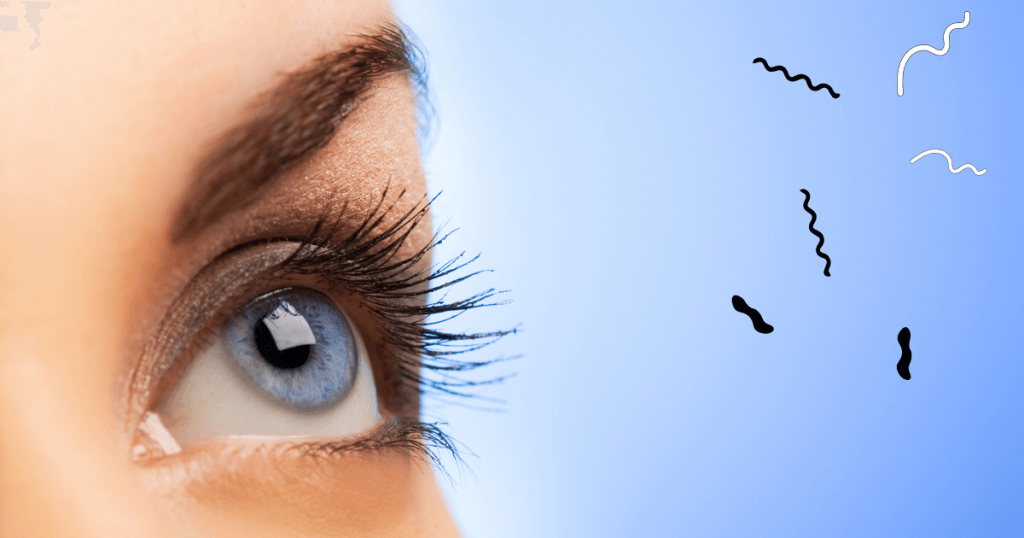
If you want to see what eye floaters look like (and maybe feel better about what yours look like), there are plenty of pictures of eye floaters online! There are also some helpful videos on YouTube that show what eye floaters actually look like inside the human eye. Seeing these images is a great way to become familiar with what eye floaters look like and understand why they might be appearing in your vision.
Here are some other great royalty free websites you can also take a look at.
- Shutterstock – Images Eye Floaters
- Dreamstime – Pictures of Eye Floaters
- IStock – Pictures of Eye Floaters

What are the different types of eye floaters?
Eye floaters are small and dark spots that appear in your field of vision. They can be caused by a variety of factors, including aging, myopia (nearsightedness), inflammation, retinal tears or detachment, and bleeding inside the eye.
The most common type of eye floater is called a muscae volitantes Latin for “flying flies” which appears as tiny dots or fuzziness in your vision. These usually occur when your vitreous humor (the gel-like substance that fills the inside of your eyes) starts to deteriorate with age and create debris within it.
Other types of floaters include those created by vitreous degeneration (which looks like web-like strands), after-cataract opacities (caused by proteins from surgery adhering to the back wall of the eye), mouches volantes (semilunar shapes moving slowly across the visual field), optically emptied cavities filled with air or fluid due to conditions such as retinal tears or detachments, hemorrhages into the vitreous from diabetes related issues, macular holes created by trauma/injury/aging and other diseases such as diabetes mellitus II etc., Pars plana precipitates – white particles adhering firmly on one spot at times become detached but move slowly; these may sometimes be accompanied with flashes; they usually form along blood vessels located near optical disc margin).
If you notice any changes in your eyesight due to this condition, then it is important to consult an ophthalmologist right away.
What can be mistaken for floaters?
When it comes to what can be mistaken for floaters, there are several conditions that could cause symptoms similar to floaters and should be investigated further. These conditions include:
• Posterior Vitreous Detachment (PVD): This is when part of the gel inside your eye separates from its attachment site near your retina and begins to contract and thicken. Symptoms include flashes of light along with floaters and dark spots in your vision all which worsen when you look down or up.
• Retinal Tears: Floaters may also accompany retinal tears – rips/tears on one’s retina. Resulting from external trauma such as contact sports injuries or accidents involving flying objects like rocks or marbles hitting one’s face or head area near the eye region. If left untreated, a retinal tear can lead to serious complications such as detached retina where tissue detachment causes severe distortion in one’s vision if not treated immediately by an ophthalmologist (eye doctor).
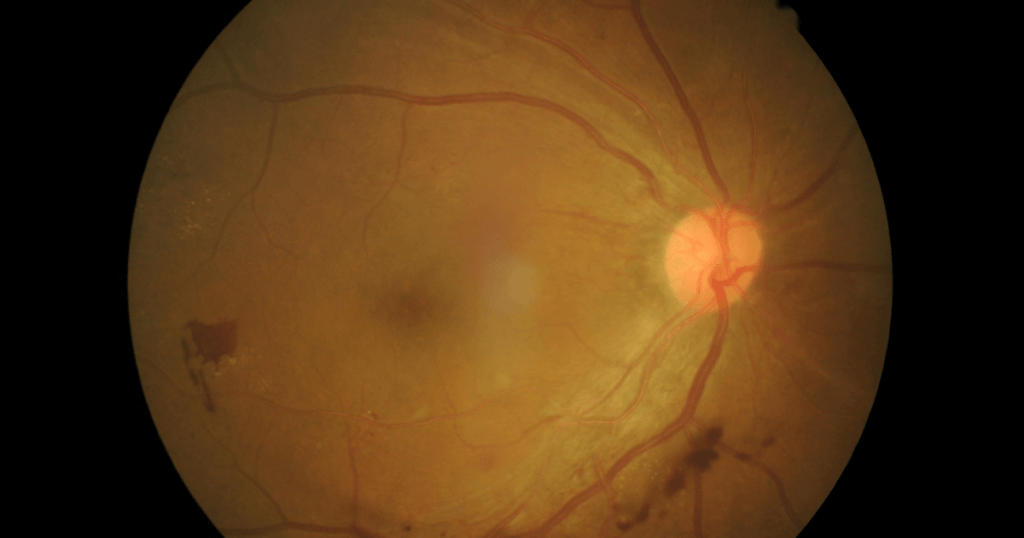
• Retinoblastoma: Another possible condition that has symptoms like those of floater is retinoblastoma which is a rare form of cancer found primarily among children under five years old but also seen among adults age 45-50 who have had radiation exposure during childhood development stages before birth through early teenage years . Symptoms include white pupil color instead of black pupils; abnormal reddish-white areas observed inside the eyes by an ophthalmologist at close distance; seeing halos around lights at night; crossed eyes; swollen eyelids; persistent headaches ;and blurred central vision due to growth & tumor pressing against normal nerves & muscles operating on center parts within & around eye lens regions.
These conditions mentioned above require immediate attention from an experienced ophthalmologist due to their serious nature so please don’t hesitate if you feel something suspicious might be occurring with any eyeball related activity!
What does black floaters in your eyes mean?
Black floaters in your eyes are small, dark spots that you can see when you look at a bright background, like a white wall or blue sky. They are typically harmless and occur when the vitreous the clear gel-like fluid inside your eye shrinks and clumps together.
Floaters themselves are not dangerous but they can be an indication of more serious eye problems, such as bleeding inside the eye (vitreous hemorrhage), inflammation of parts of the back part of the eyeball (posterior uveitis), detached retina, diabetic retinopathy or even occlusion within vessels supplying blood to parts of the retina. That’s why it is important to consult an ophthalmologist if you experience any new black floater or curtain-like shadows across your field of vision.
Your doctor may use specialized imaging tests, such as optical coherence tomography (OCT) scan and ultrasound biomicroscopy (UBM) for further evaluation. In addition to these tests regular dilated pupil examinations can help track changes in floater size and determine if it has grown with time or associated with other signs like decrease in vision or presence/increase in flashes/light streaks.
How long do floaters stay in one place?
Floaters are small, moving spots that often appear to move around in one’s field of vision. They are caused by tiny pieces of cellular debris, protein or other material that drifts through the gel-like fluid inside the eyeball called vitreous humour.
These floaters can last for days, weeks or even longer in many cases. In some cases they may be more permanent and tend to come and go depending on various conditions such as light and movement. The exact amount of time they stay in place is still largely unknown due to how long it takes for a floater to work its way out from under the vitreous humor layer and into your line of sight again.
It’s possible for new floaters to appear regularly but usually, once you’ve seen them once you get used to them being constantly present making it difficult to tell how long they’ve been there for sure! Floaters can become particularly bothersome when observed against bright backgrounds like an overhead office light or blue sky as this adds contrast which makes them more visible.
What’s important is any sudden changes such as seeing a shower of new floaters should be monitored closely as these could indicate underlying retinal issues needing medical attention right away!
Why do I see floating sparkles?
Have you ever felt like you were seeing tiny, sparkling lights dancing before your eyes? You’re not alone–the phenomenon of perceiving small particles or sparkles in the air is known as “floaters.”
Floaters occur when condensation forms on microscopic fibers that move inside the vitreous humor (a clear gel-like substance) in our eyes. This causes light to refract off these particles and form small shapes that look like “sparkles” or “floaters” to our human eye. While some floaters can be very big and dense enough to cast a shadow across your field of vision, most floaters are too small and scattered to spot easily.
The best way to check for floaters is with an eye exam from an optometrist or ophthalmologist who can assess any changes occurring within your eye’s vitreous humor. Several conditions related to aging eyes, such as posterior vitreous detachment (PVD), age-related macular degeneration (AMD), retinal detachment and diabetic retinopathy may cause formation of more extensive clusters of creased lines, irregular shapes and dots which could potentially block vision. Always consult your doctor if you experience significant increase in new floater spots!
Although it might seem scary at first if you start noticing anything floating around in front of your eyes, chances are they will be harmless little glimmers—just don’t forget regular eye exams so both conditions can be monitored properly!
How do you get rid of floaters fast?
Floaters are a common eye condition that can cause discomfort, especially if they’re near the center of your vision. Although there’s no guaranteed way to get rid of floaters fast, there are a few effective strategies you can employ to reduce their presence in your vision.
First and foremost, remember that the best way to manage any type of eye health issue is to practice prevention. Make sure you’re eating right, a balanced diet rich in color vegetables and fruits will help protect your eyes from any kind of damage over time. It’s also important to wear sunglasses with 100% UV protection when outdoors, as this will help keep harmful UV rays out of your eyes and prevent floaters from forming due to direct exposure.
If you already have floaters, it’s still possible (though unlikely) for them to go away naturally over time as the vitreous gel in your eye shifts or liquefies naturally with age. Be aware though that it’s not advised for you try and make this happen faster by moving or ‘shaking’ your eyeball. Doing so could further damage the delicate tissue inside the eye leading to more serious conditions such as retinal detachment in some cases!
In addition, certain lifestyle changes may be able to help reduce existing symptoms: avoiding caffeine or nicotine; drinking plenty of water every day; reducing stress levels through activities like yoga or meditation; taking omega-3 fatty acid supplements which promote healthy eye tissue; wearing eyeglasses rather than contact lenses while sleeping – all these steps might assist managing symptoms associated with floater presence such as light sensitivity & headache caused by straining one’s eyes too much trying focus on objects affected by floaters.
Finally, if none of these work for you. Laser surgery called vitrectomy does exist that works directly on removing/dissolving parts afflicted with debris/tissue causing floating specks from within one’s sight but this should only be considered after consulting a professional ophthalmologist for an accurate assessment & diagnosis about the source & nature severity behind those spots affecting your vision!
Final Thoughts
So there you have it – if you spot something floating across your field of vision every now and then, chances are it’s just an eye floater! In most cases, they are completely harmless and don’t require medical attention; however, if you experience an increase in their activity, it’s important to speak with your optometrist right away as this could be indicative of a serious underlying issue such as retinal detachment or PVD. For those curious about what different types of eye floaters look like or for those concerned about seeing them too often feel free to search for pictures of eye floaters online! It might just help put your mind at ease.


