



Are you looking for ways to beat lazy eye, or Amblyopia?
You’ve come to the right place. Amblyopia can be a real drag on your ability to see clearly and make it hard to do everyday activities, like drive a car or watch TV. Fortunately, we’ve got eleven fun and easy ways that you can use to overcome amblyopia (lazy eye) today. So put on your thinking cap and get ready for some fun.
1. Exercise Your Eyes:
One of the best ways to beat lazy eye is by exercising your eyes regularly. This will help strengthen the weak eye muscles that are causing your vision problems. Try doing eye exercises like rolling your eyes in circles, moving them up and down, or side-to-side. You can also try focusing on distant objects for a few seconds at a time and then bringing them close up again.
2. Wear an Eye Patch:
Wearing an eye patch over your weaker eye will force it to work harder which will help improve its strength over time. It’s important that when wearing an eye patch, you take breaks from it throughout the day. So that you don’t strain your good eye too much.
3. Eat Healthy Foods:
Eating healthy foods that are rich in vitamins A and C such as carrots, oranges, spinach, kale, and other leafy greens can help improve overall vision health as well as reduce symptoms of amblyopia in some cases.
4. Take Breaks from Screens:
Many people spend hours on end staring at screens such as smartphones, computers, TVs etc. Taking regular breaks from all screens will help reduce strain on your eyes which will ultimately help improve vision health over time.
5. Take Vitamin Supplements:
Certain vitamins and minerals can be beneficial in treating amblyopia. Omega-3 fatty acids are especially helpful as they help support healthy vision. While also providing anti-inflammatory benefits that can reduce strain on the eyes.
6. Play a Musical Instrument:
Playing a musical instrument can help train the muscles around the eyes, enabling them to better coordinate with each other. Plus, it’s a great way to relax and have some fun at the same time.
7. Play Visual Games:
Playing visual games like spot-the-difference or jigsaw puzzles can help train both eyes to work together more effectively which may reduce symptoms of amblyopia over time. Just make sure the pieces are big enough, so that you don’t strain your eyes too much.
8. Crafts and DIY Projects:

Crafting is also an excellent way to stimulate both sides of the brain as well as practice hand-eye coordination. All while having fun.
9. Wear Special Glasses:
Special glasses for amblyopia are designed specifically for people with this condition, helping them see more clearly without straining their weaker eye. The lenses contain prismatic elements, which help refocus light onto the retina, allowing one’s weaker eye to process images more clearly.
10. Visit an Optometrist:
Visiting an optometrist is another great way to get personalized advice on how best to treat your specific case of lazy eye. An optometrist can provide specialized tests, recommend treatments, prescribe medications, suggest lifestyle changes, and even refer you out for surgery if necessary.
11. Get Regular Checkups:
It’s important that people with lazy eye get regular checkups with their ophthalmologist every few years (or as recommended by their doctor) to make sure that their condition remains stable and any potential complications are caught early on.
FAQ’s For Amblyopia (Lazy Eye)
How does amblyopia affect daily life?
Amblyopia, also known as (lazy eye). Is a very common condition that can have a significant impact on daily life.
Often this affects activities such as driving, playing sports, even reading and writing may become more difficult if left untreated. Additionally, people with the disorder may experience headaches due to trying to overcompensate by focusing on small details.
What does a person with amblyopia see?
A person with amblyopia (lazy eye) develops poor or blurred vision in either (or both) eyes. This can lead to difficulty seeing objects from far away or acute difficulty seeing clearly up close.
Put simply, we don’t “see” everything clearly because our brains aren’t connecting all dots. So to speak based on what they receive from both eyes when using them together, distance and depth perception can suffer too. That being said though this doesn’t mean someone with amblyopia can only see blurred images either; rather they may experience difficulty discerning certain shapes and details more than normal .Which makes tasks like reading small print much harder than it would be otherwise.
Can amblyopia affect the brain?
Amblyopia, more commonly known as (lazy eye). Can have a very real impact on the brain and it’s normal functioning. The condition is caused by a lack of use in one or both eyes, leaving certain areas of the visual cortex of the brain understimulated. This can lead to difficulties with visual skills such as depth perception, which play an important role in how we interact with our environment on a daily basis.
The effects that amblyopia has on the brain go beyond just visual processing skills too. People with lazy eye are also at higher risk for anxiety and depression due to issues with developing self-confidence from having difficulty seeing normally.
At what age should amblyopia be corrected?
The best time to correct lazy eye is when a child is between the ages of 3-7 years old. When the complicated connections between the eye and the brain are forming.That being said, sometimes lazy eye isn’t identified until later in life. If this happens, you may still be able to improve your vision with some modifications or alternative therapies such as eye muscle exercises or refractive correction surgery.
Every case of amblyopia is different and requires tailored care from an optometrist or ophthalmologist who specializes in treating this condition, the earlier the better. So if you’re concerned about any blurry vision issues your child may have (or even yourself), it’s always best to get checked out sooner rather than later. Prevention truly is the best medicine.
What is considered severe amblyopia?
Severe amblyopia typically affects only one eye at a time, but can affect both if left untreated for extended periods of time.
The diagnosis of severe lazy eye usually relies on testing visual acuity using an ophthalmoscope. Different levels are categorized based on how much blurriness reduces normal sight. (Mild amblyopia) is often classified as being visual acuity of 6/9 to 6/12. (Moderate amblyopia) as being visual acuity worse than 6/12 to 6/36. And (Severe amblyopia) could range from 6/36 to no light perception. Poor depth perception may also accompany this condition due to lack of binocular experience. Stereoacuity (ability to detect fine details) may become diminished if not treated early enough, leading to large areas without detailed information being perceived by both eyes together.
Is there surgery for amblyopia?
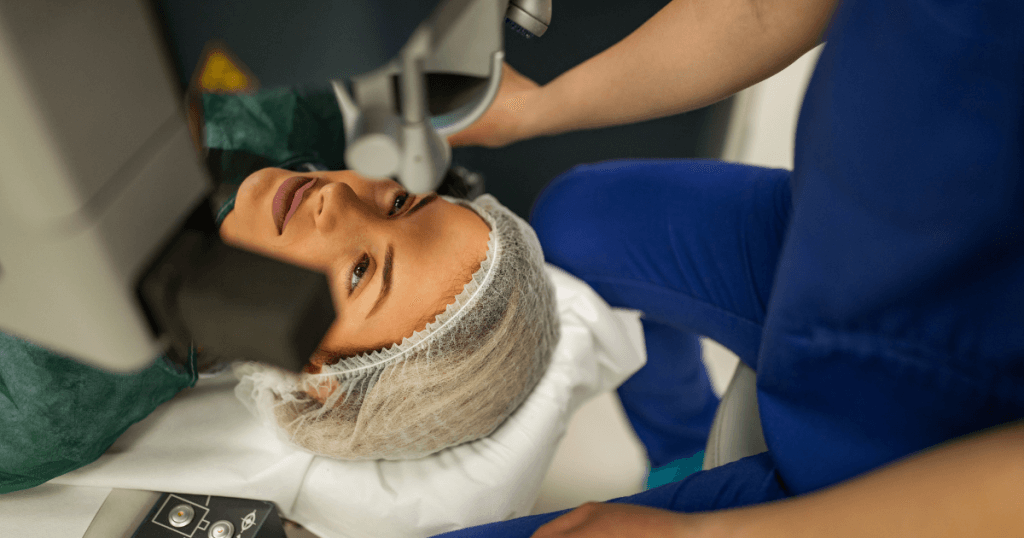
The most common surgical treatment for amblyopia is corrective strabismus surgery. This procedure uses tiny incisions and stitches around the muscles controlling eye movement to balance how each eye works together. The goal of this type of surgery is to improve binocular vision so that the two eyes work together without causing double-vision or eye strain headaches.
How long do you have to wear a patch for a lazy eye?
It all depends on the severity of your lazy eye and the health of your vision. Generally, doctors recommend that you wear a patch for about two to six hours per day. The amount of time you should wear it may increase or decrease depending on how well you respond to treatment.
Is amblyopia genetic?
Yes, amblyopia (commonly known as lazy eye) is indeed genetic. It is caused by differences in the development of vision between one or both eyes.
Lazy eye is a relatively common condition which affects approximately two to three percent of the population and can be hereditary. It typically occurs when there is an uneven development of the visual system between one or both eyes, causing them to work independently rather than in tandem with each other. This results in one eye having better vision despite both being present at birth. The unequal levels of vision can be attributed to a wide range of factors including genetics, but also environmental influences such as prolonged use of cell phones or video games that cause one eye to become more dominant over time.
Is amblyopia a birth defect?
Yes sometimes people are born with amblyopia (lazy eyes). Amblyopia tends to develop during childhood, usually between infancy and between seven years old. It occurs when the brain favors one eye and suppresses signals from the other eye due to misalignment of both eyes, blurriness in one eye (farsightedness or nearsightedness), or any kind of visual obstruction that affects only one eye (cataracts).
Final Thoughts About Lazy Eye
While it may seem daunting at first. There are lots of fun and easy ways you can beat lazy eye (amblyopia) today. Whether it’s through diet changes, using special glasses, playing visual games, doing vision therapy exercises, taking vitamin supplements, wearing an eye patch, or visiting an optometrist, etc. These eleven tips should have you well on your way towards improving your overall vision health.
Thank you for reading!


